VISITS

Tuesday, 24 July 2012

Football Programmes / old companies.

Andrew Butler kindly sent me these pictures from his large collection of old Boston United Football programmes, it is interesting to see which firms have gone out of business and I have shown a few that are advertised in the Programmes.


The only ones above remaining in 2012 are The Britannia Inn and H.H. Adkins


Loveley's cafe in the Market Place.


Hutson's, 11, Wide Bargate on the left. This building was at one time the Woolpack Inn.


A 1927 Programme.


The Red Lion Hotel.

Cheshire's can just be seen on the extreme right.


King's Cafe.


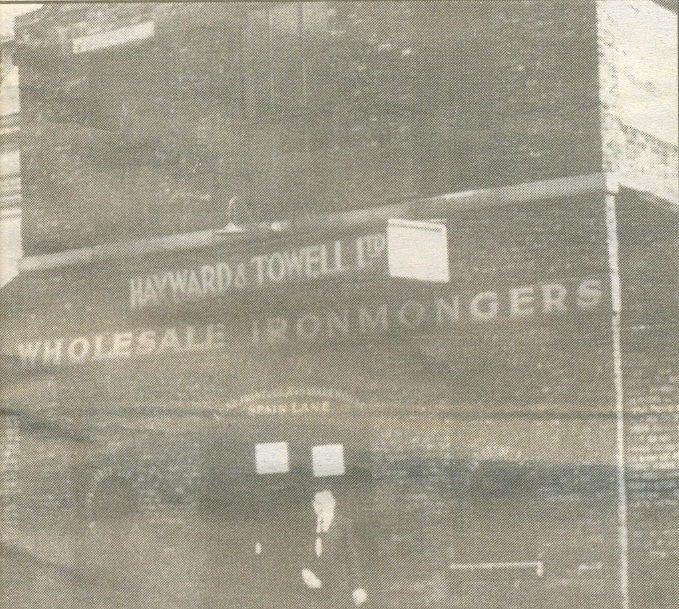
Hayward and Towell's South Square premises.

Sunday, 22 July 2012

Around Boston. Matthew Flinders.

Matthew Flinders (March 16, 1774 - July 19, 1814) was born in Donington, a village about 10 miles from Boston, he was an explorer, naval officer and navigator and he circumnavigated Australia and mapped much of its coastline.
Flinders first sailed to Australia in 1795 for the British Navy aboard a ship called the "Reliance." He and his friend George Bass (the ship's surgeon who had lived in Boston) bought an 8-foot-long boat called the "Tom Thumb" in order to explore the treacherous coastline of southern Australia. They first sailed south of Sydney (to Botany Bay) and rowed up the Georges River. During the years 1795 to 1798, they mapped much of the southeast coast of Australia and sailed completely around the island of Tasmania. Flinders returned to England on the "Reliance" in 1800.

Matthew Flinders.

In 1801, Flinders returned to Australia as captain of the 334-ton ship called the "Investigator." He first sighted land at Cape Leeuwin (the southwest tip of Australia). On this second trip, he mapped Australia's entire southern coast, from Cape Leeuwin to the Spencer Gulf (which he sailed up) to the Bass Strait (named for his friend George Bass, it separates mainland Australia from the southern island of Tasmania). On July 22, 1802, he sailed to the east coast of Australia, mapping the coastline from Port Jackson (where Sydney is located) up to the Gulf of Carpentaria. He continued west and then south, sailing completely around Australia; he returned to Port Jackson on June 9, 1803, even though his boat was leaking badly. This was the first time anyone had sailed around Australia.

On his way back to England in the autumn of 1803 (on a different ship, the "Cumberland"), Flinders had to make a stop for ship repairs at Île de France (now called Mauritius) in the western Indian Ocean. Thinking he was a spy, the French kept him prisoner for six and a half years and stole his charts and papers (he was released when the British took over the island). He didn't arrive home until 1810, and reached home sick and a forgotten man. He wrote an account of his travels, called "Voyage to Terra Australis Undertaken for the Purpose of Completing the Discovery of that Vast Country," and died the day after it was published.

The bronze statue below, erected in Donington Market Place in March 2006, also features Trim, his cat, which travelled on voyages to Australia with him but disappeared on Mauritius.


Monday, 16 July 2012

Odds and Enders.

A mix of pictures that don't fit in any category.


The Cattle Market in 1959.


Hoppers Jewellers (opposite Oldrids) in Strait Bargate.


The Station, looking toward West Street crossing.

Hairdressers advertisement.


A painting of Boston.


A Boston Police Force button.


The Stump on a corkscrew.


A receipt from Bothamley's (was opposite Marks and Spencers site).

Saturday, 14 July 2012

Ron Diggins.

A few years ago Ron Diggins was officially named the world's first disc jockey by specialist music-mixing journal DJ Magazine.


Ron was a professional radio engineer with a business in Boston providing public address systems


"I'd been playing background music and doing voice-overs out the back of my van at school sports days and the like," he told the Boston Standard. "It was nothing to do with dancing – that was the last thing on my mind." But in September 1947, the farm girls from the Swineshead Land Army decided Ron’s gear could be put to better use: "They were passing the office, saw the van and came in to ask if it could be used for dancing. They were having a harvest supper with some of the Italian POWs. Well, I'd never thought of it before, but I didn't want to lose the booking – so I said I'd give it a go."


"Back then there was just the waltz, the quick-step and the Palais glide – and I always ended up with the National Anthem," he explained. "It was unheard of at the time to play records at a dance and it just took off from there – although I had no idea how things would snowball."


Ron’s 78s proved wildly popular, no doubt because his record selections gave audiences slightly grander music than they were used to. "When I started out, the ordinary village halls danced to live piano and drums – that's all. If it was something extra special, they'd have a violin as well."

Three ladies enjoying Ron's music.

In 1949 he built his famous ‘Diggola’ a wonderful art deco mobile DJ booth modelled on the bandstands of the jazz era. The first of six, it came complete with double decks for 78s, a home-made mixer, lights, microphone, amplifier and ten speakers. "It took me about six weeks to build the first Diggola. We couldn't get plywood in those days, so soon after the war. So I had to make it out of coffin boards."

Ron's Hillman Estate Mobile Disco.

In the ’50s Ron Diggin's fame had spread so widely around south Lincolnshire that he had to hire two other DJs to keep up with his bookings. His success angered the Musicians’ Union, who used their clout to prevent him playing larger venues. So sadly, though he’d set his heart on it, Ron never played Boston’s Gliderdrome. He retired in 1995 after playing around 20,000 parties. The most he ever charged was £50.


"I've invented nothing," he insisted on his 90th birthday. "I put the same things to a different use, that's all."

West Street.


The West Street of today (2012) is mainly a mixture of Turkish, Polish, Indian, Chinese and other foreign shops so let's return to a better time when it was a beautiful part of our quaint old town and all the businesses were English, and in a lot of cases owned by local people. The photographs are all of West Street in different years.


First of all the year 1956.
One of Boston's favourite hairdressing salons, "The Cameo" was situated in West Street which also provided manicures, face massage and sold various cosmetics. Stan Cooper had a shop that specialised in the sale of motorcycles, new and second hand and also did repairs and spares, he was also an agent for James pedal cycles. Scotney's sold jewellery and did watch and clock repairs.


One of the grandest shops was Day's, founded in 1884 by Charles Day and was being run in 1956 by his sons Charles and Fred Day. Mr. Charles Day junior's opinion in 1956 was that West Street had "changed a great deal in the past few years". I wonder what his thoughts would be now !


Howes and Davies, a men's outfitting shop, prided themselves on their personal touch and L. F. Vere's "Select Cafe" was popular in the town, not only for a cup of tea but for their wedding and birthday cakes as well.


This building was pulled down and the Regal Cinema built on the site.

H.M.Hames shop supplied all baby requisites and had done so since it was established fifty or sixty years before, in 1956 it was owned by Mrs. D. Parvin whose Father founded it.

Extreme left: The old Boston Guardian newspaper building.

No matter what you wanted in the way of office equipment Eastern Counties were able to supply it from "typewriters, duplicators, dictaphones and adding machines to every type of printing and stationery" and in 1956 the firm celebrated its tenth anniversary, it was founded by Mr F.J. Taylor in the front room of his home in Eastwood Road, Boston.


Best's furniture shop, The Eagle pub is on the extreme right.

The Pop Shop, well patronised by the younger generation, commercial travellers and lorry drivers alike for "a nice cuppa" was very popular. For many years before the building was used as a pawnbroker's shop and in 1956 the Pop Shop had been there for seven years.
Ron Diggins had his Radio, TV and electric supplies shop in West Street in 1956 and was equally well known in Boston for his "Diggola" with which he provided music for many local functions.


Here I will give a few of my own memories of  West Street buildings and businesses that have disappeared in my lifetime.
Scotneys Garage was where P.C.World is now and next to it (on the corner of Trinity Street) was a little model shop with a huge tree outside of it. The Royal George pub, the friendly little Post Office (run by Mr. Kirton I think), The Regal Cinema, The Wimpy Bar, Cheers clothes shop,


Scotneys jewellers, Stanwell's butchers, Jimmy Wards herbal drinks, Arme's,


The Police Station at the side of the Municipal Buildings, Cheshire's furniture shop, Pop shop, Arnold Green's, Dr. Usmar and Dr. Kaleba's surgery, Parkinson's, Boston Guardian building, Don White's cycle shop and the Labour Exchange.

Wednesday, 11 July 2012

Church Street


Church Street today (2012) is a small, quaint cobbled area of Boston with shops, a cafe and of course the Britannia Inn. It has hardly changed since 1956 (picture below) the year when one lady, Miss Jessie Mason, who was born in Church Street in 1866, spoke of her memories of the street.

(above) Church Street in the 1950's.


(above) An undated picture of Church Street, but obviously before Health and Safety days as the hung up rabbits show !

She recalled Miss Storr's school for infant boys and girls, Ward's carpet warehouse and Tuxford's goldsmiths and silversmiths. She admitted that she liked it better in her childhood but the memory was tempered by the thoughts of regular flooding at very high tides. These occasions she recalled caused great excitement. To the cries of "The eagre's coming, the eagre's coming," whole families would turn out to rescue what they could from the inevitable flooding and the men to tend their boats. Talking of the river, Miss Mason remembered skating on the River Witham six days a week for six weeks in 1875.
Lawyer Arkley, a well known figure in those days, was quite a character. She recalls he adopted a dictatorial attitude about who should enter the churchyard, and certainly wouldn't allow wheeled vehicles, such as perambulators, to pass through. There were four posts barring the way from Church Street to the Churchyard and Lawyer Arkley lived in the house on the corner opposite the Church Key so was therefore able to keep a sharp eye on all who passed.

Mr. Hackford, in the top hat, standing outside The Church Key, Lawyer Arkley lived in a house opposite out of shot of the picture but the 4 posts can be clearly seen. The Stump in this view would be directly behind us.

There was a butter market in those days, held at the opposite end of Church Street. Here sat the country women with huge baskets of butter and eggs, it was a flourishing market and brought a lot of business to Church Street. The Church Key, so called because the keys of The Stump were kept there, was the home of the verger for many years Mr. G Hackford. Some people believe the Key was originally spelt Quay and with steps on the wall on the riverside and old prints showing boats unloading there this could be true.

Tuesday, 3 July 2012

Boston Guardian

The Boston Guardian newspaper began in 1854 and ran for over a hundred years until 1958, here are some snippets from one of the early issues dated April 19th. 1854.


There is an announcement that Steam Packets for Lincoln leave the Grand Sluice every morning at nine 'o' clock (Sundays excepted) arriving in Lincoln in time for trains to all parts of the Kingdom. Packets also left Lincoln for Boston at ten 'o' clock each day and arrived at Boston at four 'o' clock in the afternoon.


The advertisement columns provide many reflections of Boston life at this period, for one guinea Mr. Charles Ridgway taught Polka in six lessons, Mr. Keller had a musical warehouse in High Street, a library for subscribers and he was an insurance agent as well and Mr. J. Buck of Strait Bargate sold pianos at his music room. Music was not on tap in those days and people had to make their own.
The Pleasure Gardens at Vauxhall, Skirbeck, were re-opening, the Yacht Club were entertaining their Commodore to a public dinner at the White Hart and tenders were required for the building of the Corn Exchange and the Athenaeum. Mr. S. Southwell, hair cutter and wig maker of West Street not only made ladies and gentlemen's wigs but had private hair-cutting rooms next door to the Mansion, West Street. I wonder what became of the Mansion?
The old Guardian referred to was printed by Robert Roberts, in Strait Bargate, but for many years the Guardian had its works in West Street, the building (on the left in the picture below) was demolished and the Pizza Hut now stands in its place.